2026.06 · 7 min
Can AI replace consultants?
I don't think it can. Human trust, credibility, and being an industry insider are why AI replaces the tasks, not the job. So I built a product to automate my tasks — and the real lesson was learning what to delete.
I think it can't. Human trust, credibility, and being an industry insider are all good reasons why it can't replace the job, only the tasks.
That being said, the demand for a human gatekeeper for AI output is much lower than the current workforce, so I still think AI is replacing many junior roles.
Let's build a product to automate my tasks.
time to lock in
Step One: Context
Step 1 is understanding the context. As a junior consultant, my day-to-day work is usually:
- Trying to answer an ambiguous, extremely hard question. (e.g., Is the Y market ready for our client to enter?)
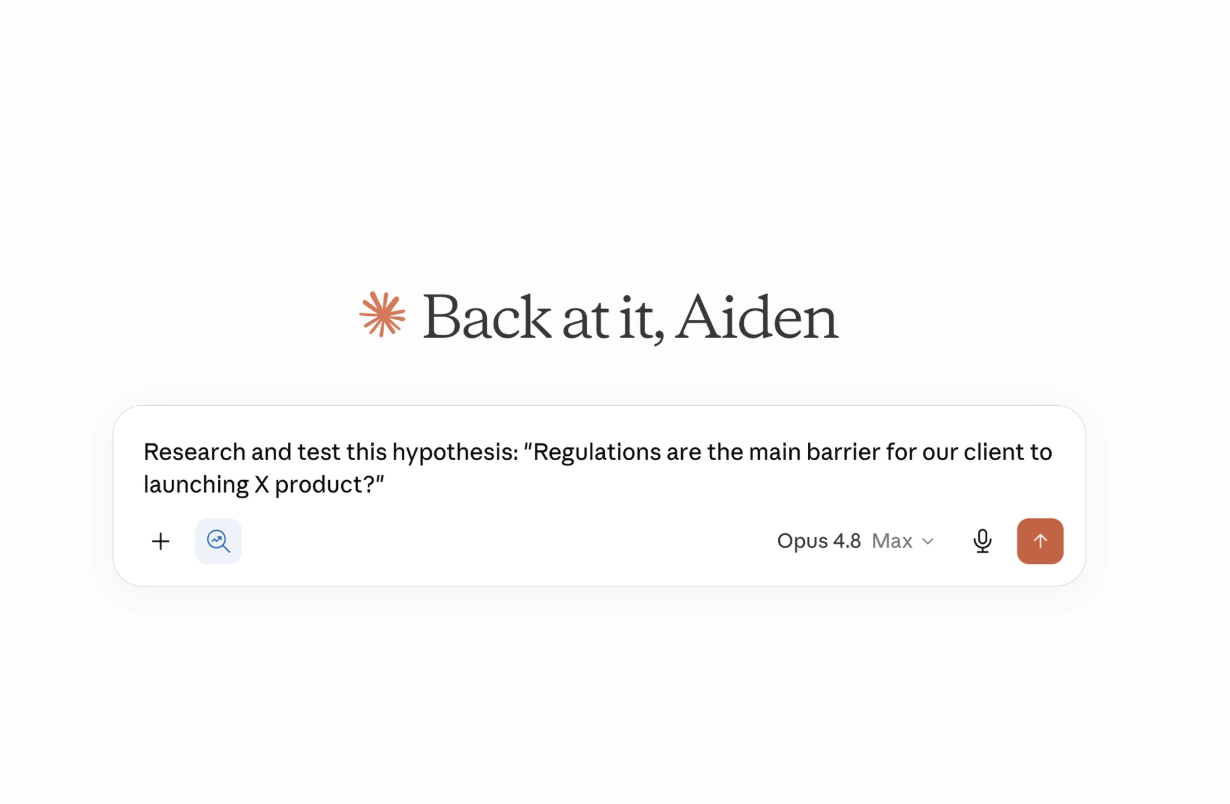
- Test a hypothesis. (e.g., “Regulations are the main barrier for our client to launching X product”)
The Human Way
In consulting, we generally solve these two types of questions by these steps:
- Define problem
- structure problem
- prioritize issue
- develop analysis
- conduct analysis
- synthesize findings
- develop recommendations
(Google search “McKinsey 7-step problem solving” for more info, a lot of decent explanations online, e.g., slideworks.io/resources/mckinsey-problem-solving-process)
The AI Way
Can a company put $500M into a new product launch just because Opus 4.8 says to do it? I don't think so. Thus, I think the gap comes down to one thing only: trust. Client recommendations are provided by consulting firms such as McKinsey and BCG. They have their reputation and credibility. Thus, AI work needs to be proofread, interpreted, and refined by skillful consultants.
Thus, human judgment remains the KSF (key success factor) here; I want to design a workflow that follows a human approach and serves as an assistant in my work.
Product Thesis & Scope
Pain point: I don't trust AI output because its reasoning process is a black box.
Solution: Break that black box into steps a human can see and review. and let AI do the research.
Scope: I mentioned that my tasks are testing a hypothesis & trying to find an answer to an ambiguous question. However, for this product, I focus only on testing the hypothesis, meaning the input will be statements, not questions, because these two tasks have very different scopes. Answering questions needs clarification and a lot of back and forth with real people, so I will only be focusing on decomposing a statement and finding the true and false behind the statement.
Step Two: Let's Cook
Pasted all the context from step 1 into Claude Code and told it to create this product. Tested it, and three problems pop up:
Problem
1. The decomposition/definition of the question to be answered isn't concrete enough, or I don't agree with it.
e.g.,
Problem Statement: Is the Y market ready for our client's entry?
AI decomposition of the problem:
- Is the market big enough?
- Is it market penetrable?
- penetration forecast
My Comment:
- Looks sensible at first glance, but the scope of the forecast is ambiguous.
- For me, forecasting penetration equals to answering the two questions (market size & penetration).
- Other than size and % forecast, there are also qualitative factors in answering “Is the Y market ready for our client to enter?”, e.g., regulations? opportunity cost?
2. The evidence is fake. (hallucinated URL)
3. The evidence is real but not comprehensive. (for instance, revenue growth doesn't equal profitability growth, but AI might catch revenue growth data and come to the “profitability growth” conclusion.)
Solution
Solution to Problem 1:
Hard facts: Reasoning-wise, I think I'm still better than AI. Even if not, AI still has to convince me; thus, regardless of who is better, AI & me need alignment.
Solution: build a highly interactive interface; decompose layer by layer, with each layer requiring my approval to continue.
- build a
mindset.mdfile to introduce the consulting way (i.e., issue tree, hypo tree, etc) of problem solving. - build a
memory.mdfile to train AI on how to reason like me by dumping casebooks into the file, and test-run several rounds with me. - build a
lesson.mdfile, a learning loop, but not an append-only file. After every human correction, record the mindset and principle to keep it lean, avoiding it from being an infinitely growing log.
Problem 2:
Initial thought: Add a step to verify each URL's authenticity one by one, and check its quote word for word.
After test: I ran it on a real argument (“remote work lowers productivity”), and a PubMed source came back “dead”, not because it was fake, but because PubMed blocks scrapers. Naive verification was about to kill a real Tier-A academic source.
Fix: distinguish “site blocks crawlers” (PubMed, doi.org) from “actually doesn't exist” by adding a browser-like header, retry mirror sources before declaring dead. Lesson: “I couldn't fetch it,” ≠ “it doesn't exist,” and that error is most dangerous on the most authoritative sources.
Problem 3:
Solution is simple: Force answers to use verbatim source text only, no rephrasing allowed.
End Product
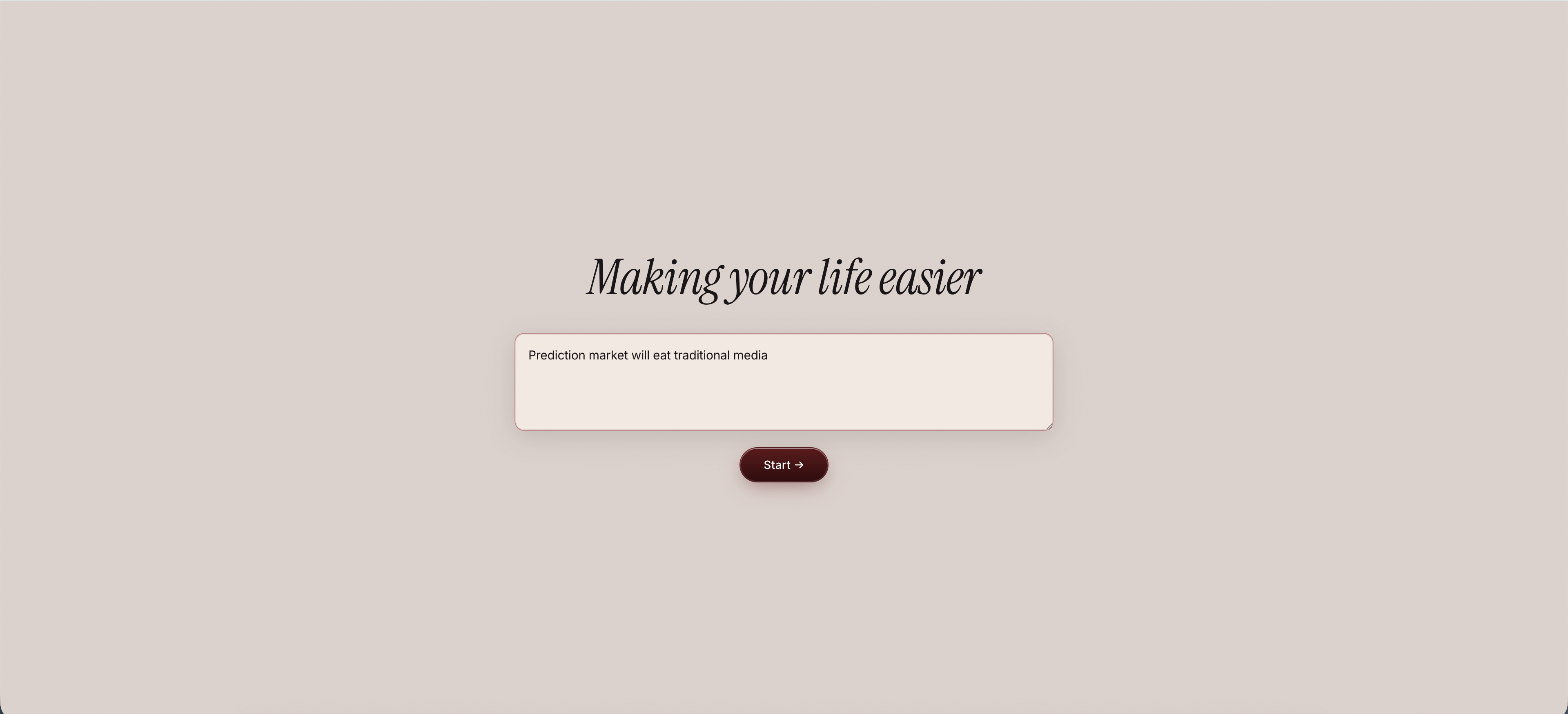
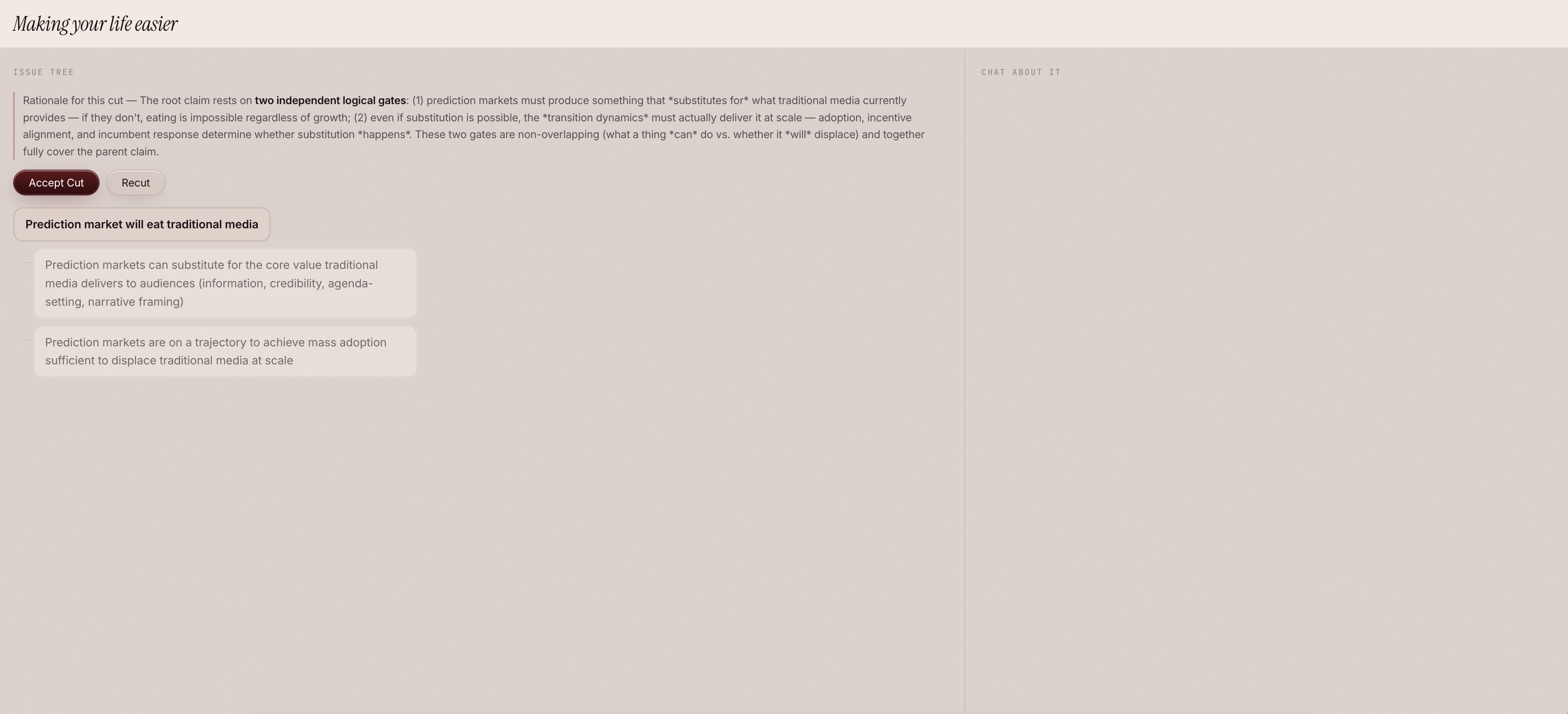
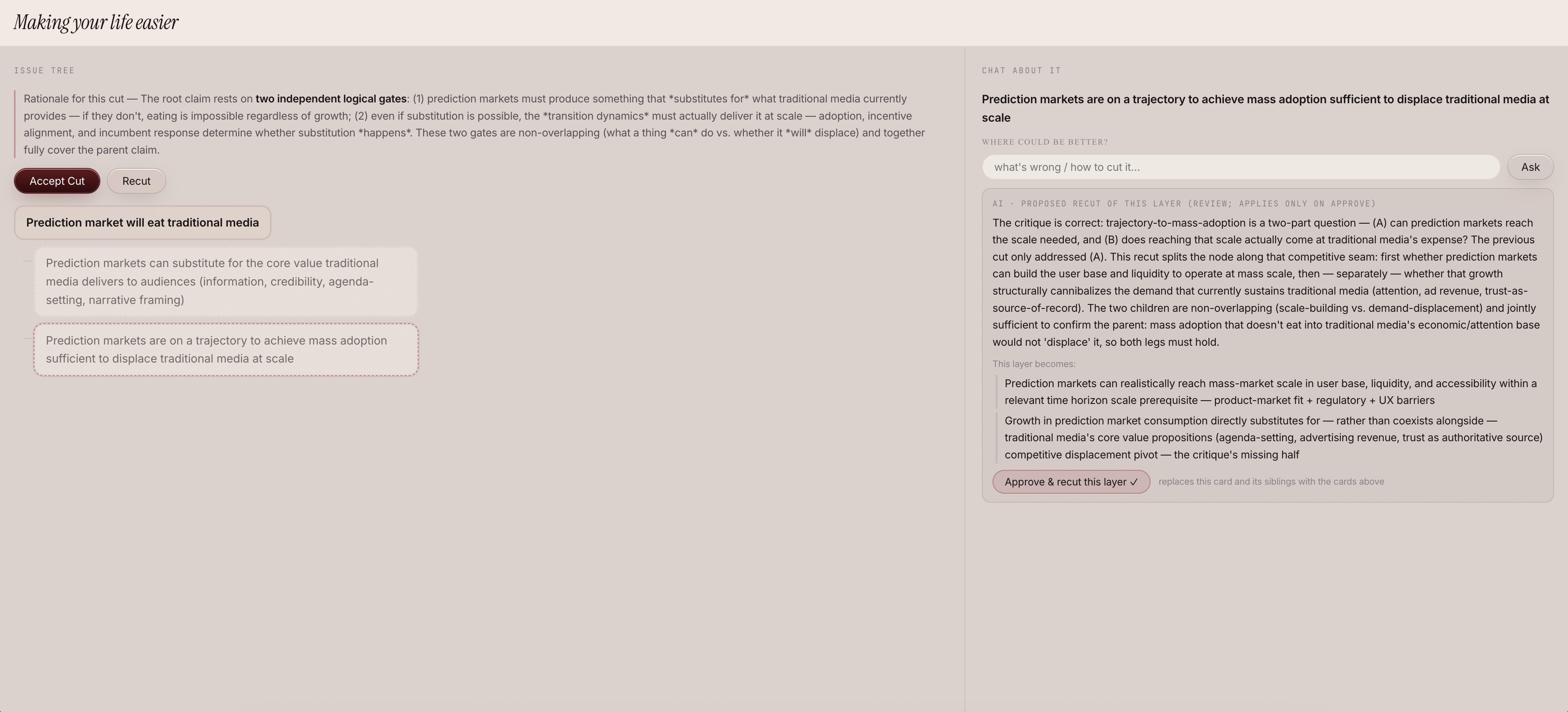
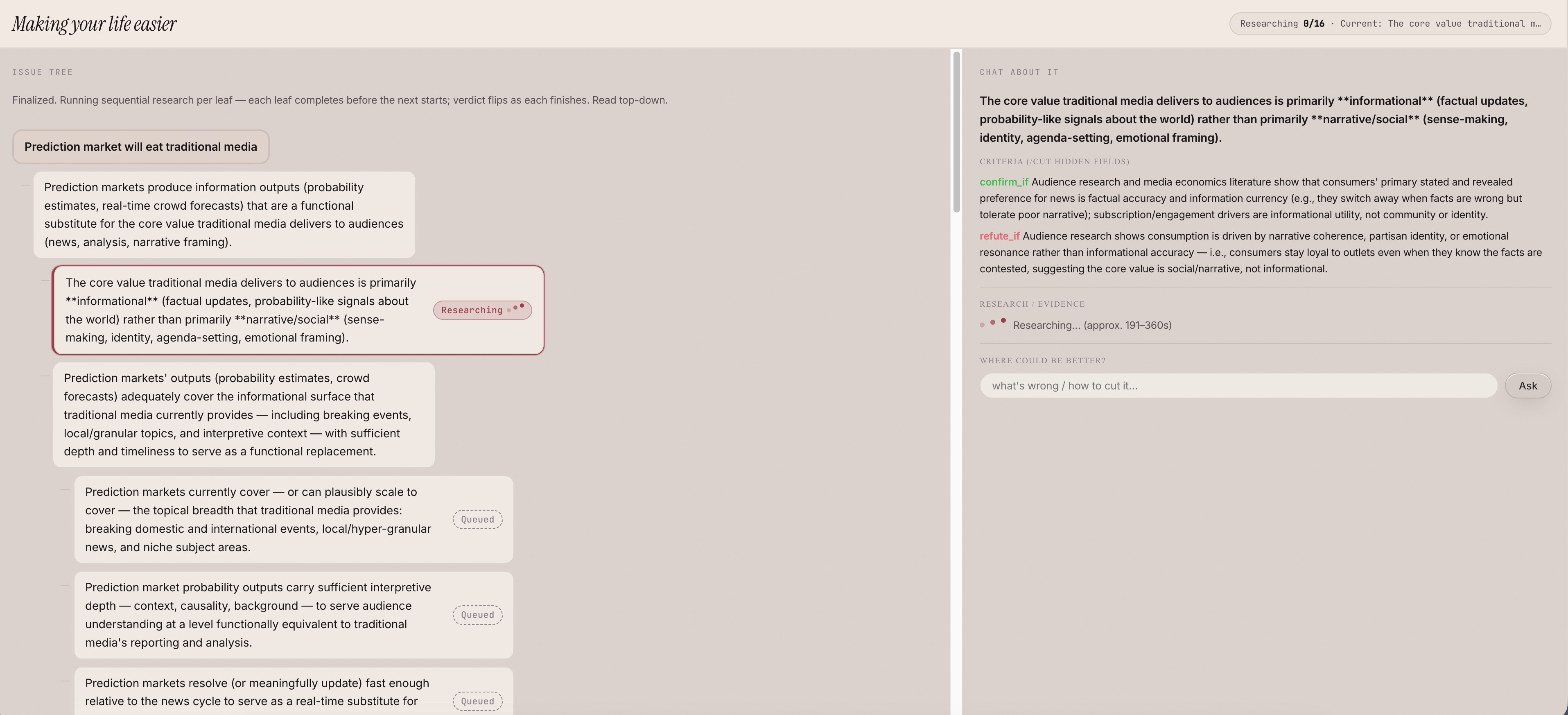
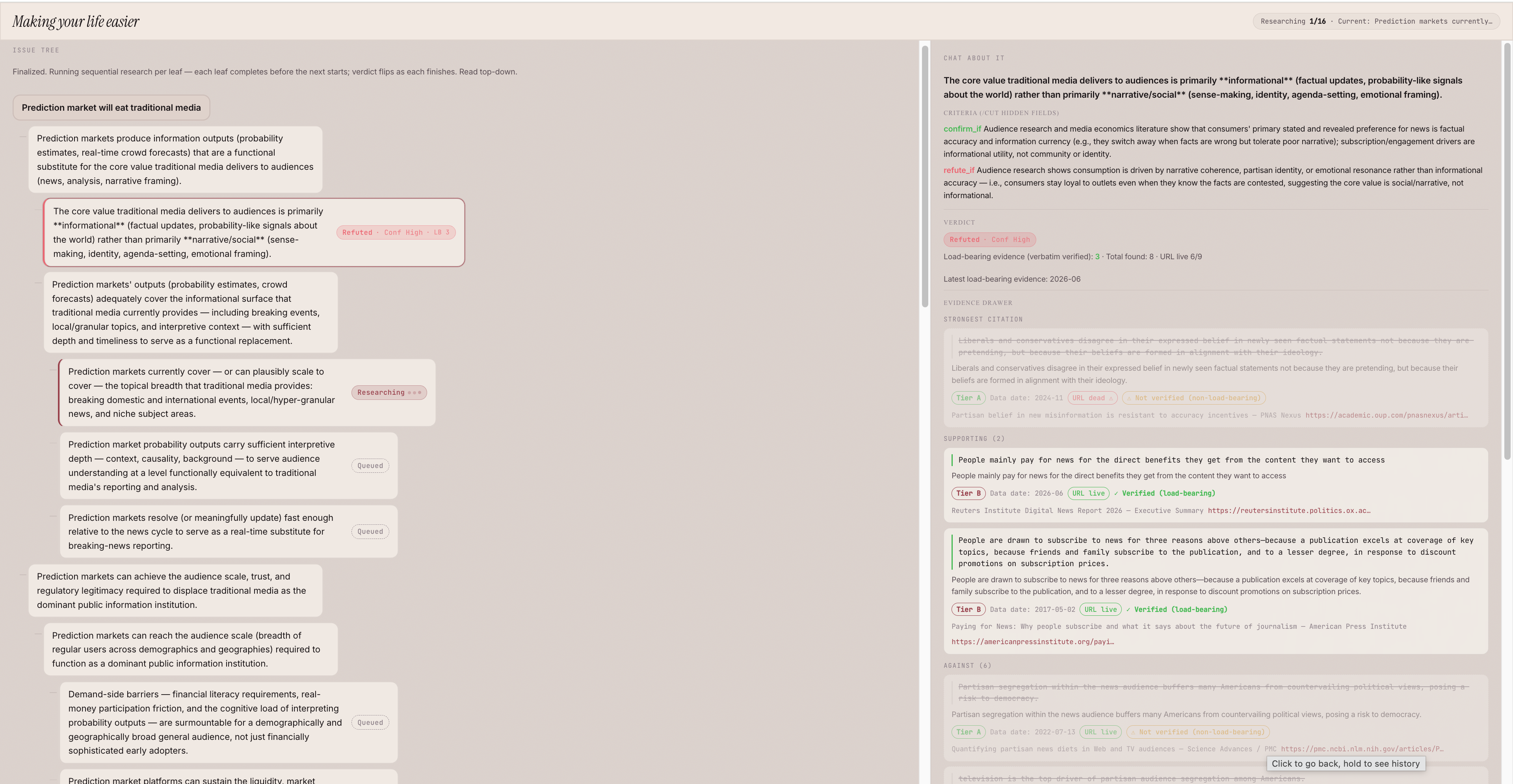
The Module I built but then killed
Additionally, I want to learn a lesson that I've learned along the way.
My mind stops at designing the input and lets AI do the research. It led me to accidentally design an auto-rollup: AI reads all the verdicts and research conclusions and rolls them into one overall answer. The summary rebuilds another black box at the end.
What replaced it: set it to allow only live URLs and real quotes; no rephrasing allowed. Instead, I add a confidence scoring system for the AI to label each answer with its confidence in how it thinks its answer is relevant to the question and can actually answer my question, even though it's also a blackbox process, but I read them myself, and the confidence index just helps me more in identifying where it could potentially go wrong.
Takeaway: Delete-first. Elon Musk once shared this sauce in an interview. Break down your work into atomic modules, then try deleting them all. Only add the module back when the answer to “Will the product collapse without this module?” is YES. This is extremely useful in my vibecoding journey because I feel like, with /plan and /ultraplan becoming mainstream, and vibecoding, AI sometimes includes some really cool features in your design, but also some fancy BS.
Lesson learned
You have to know what you are building. You are the gatekeeper in the AI loop. Otherwise, the loop is just garbage in; bigger garbage out. /plan and /ultraplan are powerful commands, but AI will wrap some BS and call it a feature if you don't have alignment with it.
Delete-first. Break your work plan into atomic working modules. Try deleting each one, and only add it back if the product won't work otherwise. Make the process as lean as possible. Don't install fancy CLAUDE.md files or skills on GitHub. Only do it when you know exactly what you need it for; then you will realize you might as well create your own. GitHub repos are like Pinterest; they inspire you, not a free plug-and-play tool.
Consultants who can ship, iterate, and grow AI products/workflows for clients are the future of consulting. We have an overarching view of the organization to know what to build, why build it, and what problems it solves. These are all way more important than building itself.